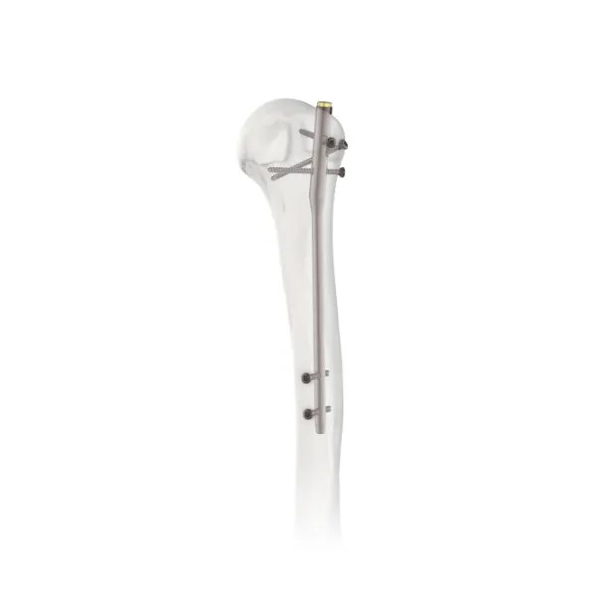
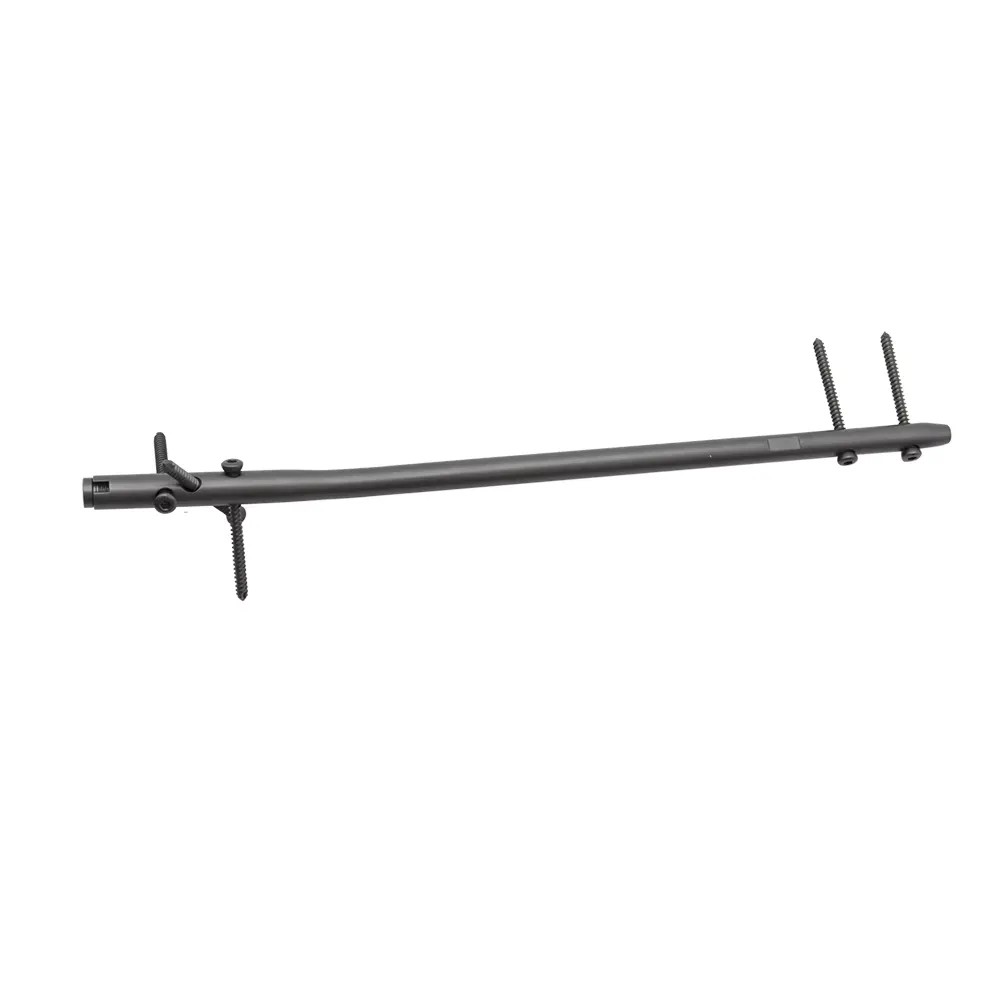
Specification of Humeral Intramedullary Nail
|
Specification |
|
Φ7×180 |
|
Φ7×200 |
|
Φ7×220 |
|
Φ7×240 |
|
Φ7×260 |
|
Φ7×280 |
|
Φ7×300 |
|
Φ8×180 |
|
Φ8×200 |
|
Φ8×220 |
|
Φ8×240 |
|
Φ8×260 |
|
Φ8×280 |
|
Φ8×300 |
|
Φ9×180 |
|
Φ9×200 |
|
Φ9×220 |
|
Φ9×240 |
|
Φ9×260 |
|
Φ9×280 |
|
Φ9×300 |
|
Locking screw: 3.5 ×20,22,24,26,28,30,32,34,36,38,40,42mm Full-threaded |
Description of Humeral Nail System
The Humeral Intramedullary Nail is a titanium alloy orthopedic implant designed for internal fixation of humeral fractures. Inserted into the medullary canal of the humerus, it functions as a load-sharing device, aligning the bone along its natural axis while providing strong internal support.
This system typically includes proximal and distal locking screw options, enabling secure fixation and rotational stability in both simple and complex fracture patterns. Its anatomical design minimizes soft tissue disruption—particularly around the rotator cuff—making it suitable for minimally invasive surgical techniques and faster functional recovery.
Advantages of Intramedullary Nail
Titanium alloy construction: Excellent biocompatibility, corrosion resistance, and optimal strength-to-weight ratio
Load-sharing fixation principle: Promotes natural bone healing through controlled micro-motion
Minimally invasive technique: Inserted within the medullary canal, reducing soft tissue damage
Multi-planar locking system: Provides strong rotational and axial stability in complex fractures
Anatomical design: Improves fit within the humeral canal and reduces irritation to surrounding tissues
Versatile configurations: Available in multiple lengths and diameters (short and long nails) for different indications
Application of Humeral Intramedullary Nail
Proximal humeral fractures (2-part, 3-part, selected 4-part fractures)
Humeral shaft fractures (transverse, oblique, spiral, or comminuted)
Pathological fractures of the humerus
Nonunion or delayed union cases
Segmental or combined proximal and shaft fractures
Open reduction and internal fixation (ORIF) or minimally invasive nailing procedures
FAQ
Q1: What is the main advantage of a humeral intramedullary nail compared to plating?
A1: It provides internal, load-sharing fixation with less soft tissue disruption, which may support faster recovery and reduced surgical trauma.
Q2: Can this nail be used for both proximal and shaft fractures?
A2: Yes. Depending on the design (short or long nail), it can treat proximal humerus fractures, shaft fractures, or combined injuries.
Q3: What material is used in this implant?
A3: It is typically manufactured from medical-grade titanium alloy (e.g., Ti-6Al-4V), offering strength, durability, and excellent biocompatibility.