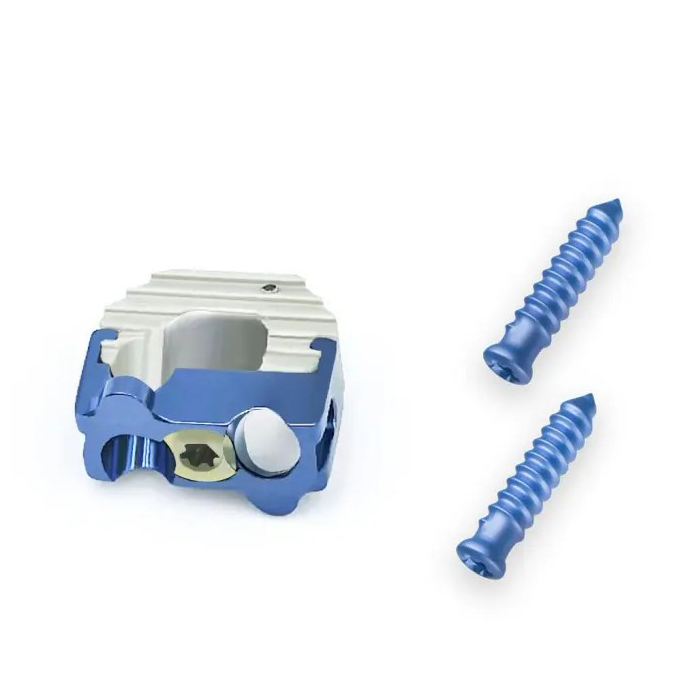
As a critical medical device, artificial vertebrae are playing an increasingly important role in the field of spinal disease treatment. They are primarily used to replace or repair vertebral bodies damaged by conditions such as tumors, tuberculosis, and fractures, helping patients restore spinal function and improve their quality of life. With continuous advancements in medical technology, the material selection, design concepts, and application techniques of artificial vertebrae are evolving continuously, bringing new hope for spinal health.
Core Materials of Artificial Vertebrae and Their Properties
Material selection for artificial vertebrae is crucial to their performance and clinical outcomes. Currently, commonly used materials mainly include metal alloys, ceramics, biomaterials, and polymer materials, each with unique advantages and challenges:
Metal Alloys: These materials typically exhibit excellent biomechanical properties and can provide robust support. However, their application may face the problem of stress shielding effect, which in turn leads to resorption of surrounding bone tissue.
Ceramics: Ceramic artificial vertebrae show good resistance to fragmentation and fatigue failure in the in vivo environment. On the other hand, the inherent brittleness of ceramic materials is a key aspect that needs improvement.
Biomaterials and Polymer Materials: The outstanding advantages of these two types of materials are their good biocompatibility and osteoconductive potential, which help promote osseointegration. Nevertheless, they may have certain limitations in terms of processing complexity and manufacturing cost.
Design Types and Functional Evolution of Artificial Vertebrae
The design of artificial vertebrae has also undergone a development process from simple to complex, and from single-function to multi-function:
Simple Support Type: This is an early design type, whose main purpose is to provide immediate stability to the postoperative spine and help patients get through the critical period of healing.
Adjustable Fixation Type: On the basis of providing support, this type of design can better restore the height of the damaged vertebral body and provide more reliable three-dimensional stability, which is conducive to maintaining the physiological curvature of the spine.
Mobile Artificial Vertebrae: Representing an advanced direction of current design, its goal is to simulate the motor function of normal spinal units, thereby maximizing the retention of the patient's spinal mobility and significantly improving postoperative quality of life.
3D Printing Technology: A New Breakthrough in Personalized Customization of Artificial Vertebrae
In recent years, the rise of 3D printing technology has brought revolutionary changes to the development of artificial vertebrae. Through 3D printing technology, precise personalized customization can be carried out according to the patient's specific anatomical structure, making the artificial vertebrae more matched with the patient, which may bring better adaptability and biocompatibility. The application of this technology provides more possibilities and optimal solutions for the treatment of complex spinal cases.
Clinical Prospects and Future Development of Artificial Vertebrae
To sum up, as an important spinal substitute,
artificial vertebrae have shown broad prospects in clinical application. With in-depth research in materials science, increasingly accurate biomechanical analysis, and continuous innovation of advanced manufacturing technologies such as 3D printing, the overall performance, biocompatibility, and therapeutic effect of artificial vertebrae will surely be further improved. This will not only bring good news to more patients suffering from spinal diseases but also promote spinal surgery treatment technology to a new level. In the future, we have reason to believe that artificial vertebrae will play an increasingly important role in the field of spinal health.